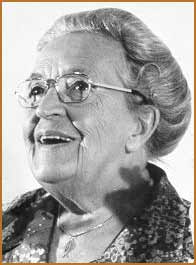
 Recently I have been reading The Hididng Place, Corrie Ten Boom’s amazing testimony fashioned in the midst of the German occupation of World War II. Arrested for her involvement in the underground organization providing shelter and aid to Jewish people during the Holocost, Corrie lived to witness the inhumane conditions and torture of the Nazi concentration camps.
Upon her arrest, Corrie pondered the place God had placed her. Had she been defeated? Why had this happened? Corrie concludes, “But . . . if the Gospels were truly the pattern of God’s activity, then defeat was only the beginning. I would look around at the bare, little cell and wonder what conceivable victory could come from a place like this” (150). However, in the midst of the dark, unpleasant circumstances surrounding her, Corrie tells of God’s faithfulness and the marvelous evidences of His work during that time.
Similarly, as we enter the Christmas season and worship Christ’s birth, we uncover a mind-boggling paradox wrapped in the package of the Gospel. Who would have thought the Son of God would have entered the world in the shelter of a humble stable? What victory could be birthed in such a place? This season proclaims the life of our Savior who would lay down his life to free us from death and the eternal judgment for our sin. However, in the eyes of the Pharisees, the guards, and those standing by, Christ’s crucifixion—His willful sacrifice on our behalf—appeared to mark his utter defeat. Despite the prophesies of old, the Pharisees could not see the true victory fulfilled through Jesus.
But, just as the baby born in the stable shattered Israel’s expectations, many times we question God’s purposes when we face circumstances we do not understand. For example, finding ourselves crushed in the battle against sin, we may question how we can stand victorious against a sinful inclination. Or, like Corrie Ten Boom, we may face physical trials and undesirable circumstances which cause us to question how anything good could blossom from them. What victory could come from this?
But, even so, God uses these weaknesses—apparent defeats—to display His power and saving victory. In the times we are weakest, incapable, and inadequate God reveals His hand at work, His provision, and His faithfulness. Amidst circumstances beyond our control, He turns us to rely solely on Him in desperation. This is victory.
“My grace is sufficient for you, for my power is made perfect in weakness. Therefore I will boast all the more gladly of my weaknesses, so that the power of Christ may rest upon me. For the sake of Christ, then, I am content with weaknesses, insults, hardships, persecutions, and calamities. For when I am weak, then I am strong.”
2 Corinthians 12:9-11
But we have this treasure in jars of clay, to show that the surpassing power belongs to God and not to us.
2 Corinthians 4:7
In the shadows of a prison cell God opened Corrie Ten Boom’s eyes to see the light of His presence like never before. Despite her weakness, He proved faithful. We can draw encouragement from this testimony—the testimony of the Gospel—and stand in awe of the God who conquers the feeble heart, fashioning victory in the unachievable, unexpected, and unknown.


 Whenever a car came they just pulled the net up, and the car would drive right under! Pretty innovative, eh?


 This dog always peeked through the balcony to watch all the commotion. From the looks of the wall, the dog has its own perferred spot overlooking the town.

 One of the most encouraging things I observed was how God's hand worked in many of the lives of fellow team mates. Dad's roommate, a Jew, had many questions about the Christian faith throughout the week. Despite their weariness from the long, involved days, they would stay up for hours before bed intently discussing matters of faith and the Bible. How neat to observe how God was softening this man's heart and using the week to turn his gaze toward spiritual things. May God continue to work and cause him to see and know the truth of Jesus Christ.


 Translating
 On the left is Miss Kay, the missionary who translated for us. Damiana (at the right) was a great help in logistics.


